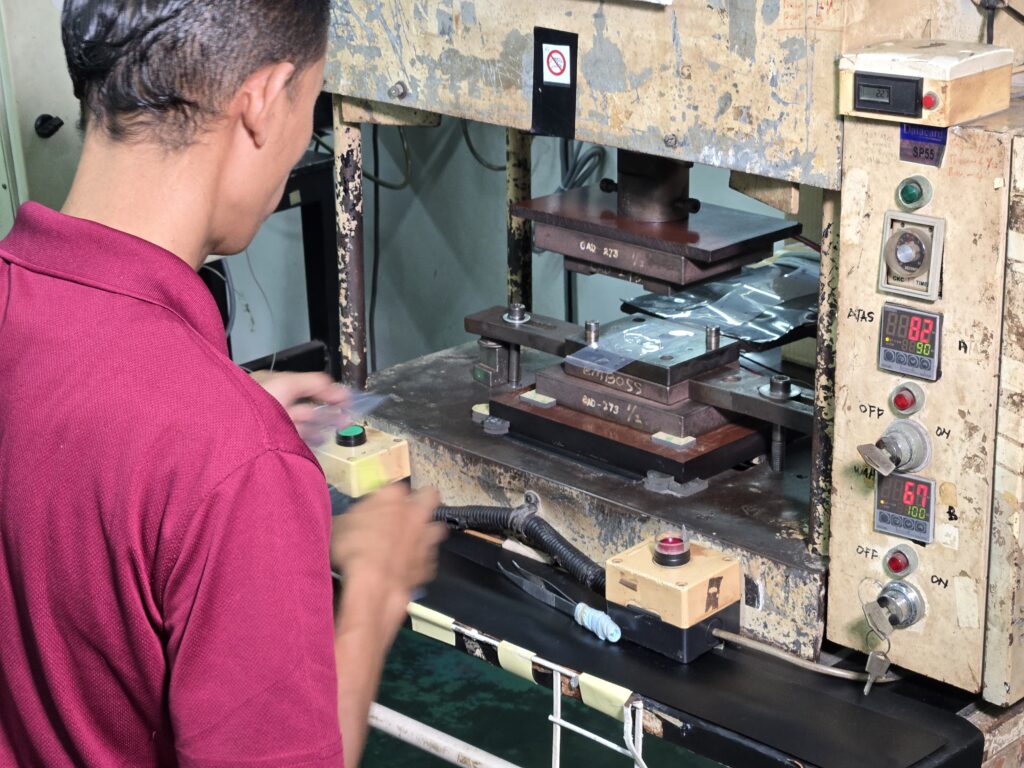
Tools & Dies Maker
Tools & Dies at HOC Engineering
At HOC Engineering, we offer an extensive selection of precision tooling solutions tailored to the most demanding manufacturing requirements. Each type of tool and die we provide is engineered to deliver performance, reliability, and precision:
1. Compound Die
A compound die performs multiple operations such as blanking and piercing in a single press stroke. This inverted tool design allows external and internal features to be cut simultaneously with high precision—making it ideal for efficient flat-part production.
2. Combine (Combination) Die
A powerful tool that combines cutting and forming operations—such as trimming, drawing, embossing, and bending—in one unit. This versatility makes it a go-to for complex part production that demands efficiency and accuracy.
3. Blanking Die
Blanking dies are designed to cut a defined shape (a “blank”) from sheet metal, creating parts like washers, discs, or gears with clean edges and superb repeatability.
4. Progressive Die
In progressive dies, a metal strip is passed through a series of stations, each performing a distinct operation (e.g., cutting, bending, forming), culminating in the final part. This method is highly efficient and ideal for high-volume production with consistent quality.
5. Emboss Die
Used to create raised or recessed designs in metal via pressing—adding both functional and decorative textures to parts. This method enhances rigidity and aesthetic appeal.
6. Bending Die
Designed to deform sheet metal along a straight axis into shapes like L, U, or V profiles. These dies facilitate precise structural or enclosure components, ensuring consistent geometry and tight tolerances.
7. Wood Dies & Pinnacle Dies
Specialized dies used for shaping or forming non-metal materials. While less commonly referenced in metalworking literature, these terms generally denote custom tooling for unique materials or parts, demonstrating HOC’s adaptability and broad tooling capabilities.
8. NC Dies (Numerically Controlled Dies)
Dies designed for automated processes—often paired with CNC or automated stamping systems—to achieve high precision, repeatability, and consistent production using digital control. This aligns with modern manufacturing efficiency and accuracy trends.
Why These Tools Matter
- High Precision & Complexity: Whether it’s single-stroke compound dies or multi-station progressive systems, HOC Engineering ensures each tool delivers tight tolerances and clean finishes.
- Efficiency & Scalability: From low-volume blanking to high-volume progressive stamping, our tooling adapts to your production needs.
- Versatility: With specialized dies like embossing and bending, we can impart both functional enhancements and aesthetic detail.
- Automation Ready: NC dies are perfect for integrating with CNC and automation systems to boost throughput and consistency.
| Tool Type | Function & Benefit |
|---|---|
| Compound Die | Performs blanking and piercing in one stroke—efficient for flat, precise parts |
| Combination Die | Combines cutting, forming, bending, embossing, etc., in a single die |
| Blanking Die | Cuts blank shapes with clean edges—ideal for simple precision components |
| Progressive Die | Multi-station processing of complex parts with high volume repeatability |
| Emboss Die | Adds raised or recessed designs for functional or decorative purposes |
| Bending Die | Forms sheet metal into L, U, V profiles—consistent structural shaping |
| Wood / Pinnacle Dies | Custom tooling for specialized materials or part geometries |
| NC (Numerically Controlled) Dies | Enables automated, high-precision production with digital control |
Why Choose HOC Engineering Tools & Dies?
✔️ High precision and reliability
✔️ Scalable from prototypes to mass production
✔️ Flexible solutions for complex requirements
✔️ Automation-ready for Industry 4.0